What is wood decay and how can it be treated?
Symptoms, damage, prevention
Wood is for trees and shrubs, kind of what reinforced concrete is for buildings. It is the tissue formed by the walls of plant cells, which is both strong and flexible, and makes up the trunk and branches. Wood not only supports plants, but also transports raw sap, i.e., water and nutrients, from the roots to the leaves, where photosynthesis takes place.
Some fungi can attack wood, altering its appearance and functionality, and even causing the entire plant to collapse: this is wood decay, which will be the subject of this article.
The symptoms of wood decay
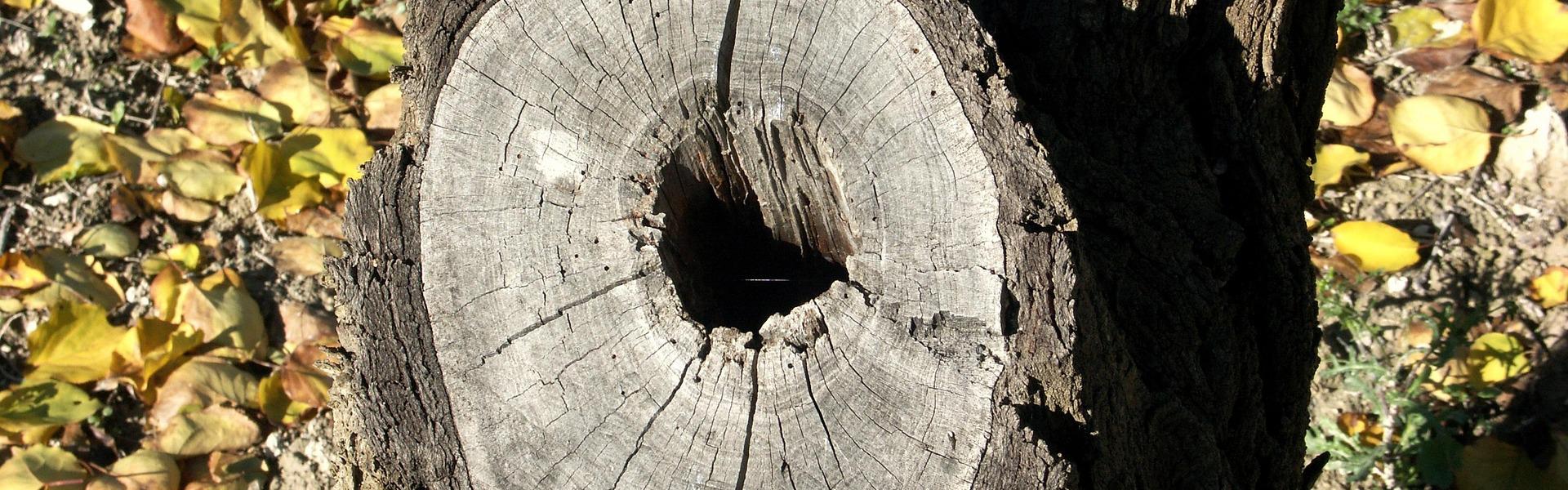
What is wood decay? It is the chemical and physical degradation of wood due to various xylophagous fungi which, thanks to enzymes, break down the components of wood (lignin, cellulose, hemicellulose) and feed on them. Decay can affect both young wood in the outer part of the trunk (sapwood) and old wood in the central part (heartwood).
There are numerous fungi responsible for wood decay, or as they are called in technical jargon, decay agents. Various disease-causing fungi have distinctive behaviors: they may prefer certain plants or be non-selective, prefer living or dead specimens, attack a certain area, or be more or less aggressive. They often do not act “alone”, but exploit conditions of weakness in the tree/shrub—stress, poor vigor—or attack old or already diseased plants. Depending on its condition, the plant can counteract the fungal attack more or less effectively.
Based on the type of wood decay they develop, fungi can be classified as agents of:
- White rot, the most common in urban greenery: the fungi alter lignin, but thanks to cellulose, the wood remains fibrous and elastic; otherwise, they can break it down completely, also destroying the cellulose.
- Brown or cubical rot, less common: the fungi alter cellulose and hemicellulose, leaving lignin almost intact, until the wood is fragmented into cubes.
- Soft rot, uncommon in gardens and generally limited to very humid environments.
Decay is insidious because it can take several years before a diseased plant shows symptoms. Apart from the alteration of the wood, which is not always visible, other symptoms of decay include the development of small leaves, yellowing and loss of leaves, drying of branches, and gummosis (typical of fruit trees in particular). In the case of olive trees, wood decay also causes olives to fall. Symptoms that do not directly affect the wood are the result of the devitalization of the wood itself, when it has lost its functions.
You can observe the fungi responsible for decay on affected plants, usually between summer and fall, in the form of carpophores—single or in groups, generally shelf-like—which allow them to be recognized. If you find sawdust near the plant, this may be a sign of the presence of ants: they do not cause decay, but they settle in the deteriorated wood and feed on it, helping to slow down the spread of the disease.


The damage caused by wood decay
Fungi generally attack the plant through wounds in the trunk, branches, or even roots, i.e., points of discontinuity in the bark, which has a protective function. Wounds are caused by pruning, broken branches (due to wind, snow, their own weight, etc.), wood-eating insects, etc. Human activities can also cause wounds: trauma from digging, cuts made by rotary tillers, impacts (e.g., with gardening equipment such as garden tractors), scratches from brushcutters, and so on.
Pruning is very dangerous: if the cuts are large, if there are many of them, if they damage tissues that are important for healing, if the pruning is drastic, if it is done during a rainy period (humidity and mild temperatures are favorable for fungi), or in winter when there is still a risk of frost.
In addition to spreading through the air via spores that infect the plant through wounds—thanks to wind, rainwater, irrigation water, and insects—wood decay is transmitted by contact between the roots of diseased plants and those of healthy plants.
Decay does not only alter the color and texture of the wood. By breaking it down, decay causes a series of functional harms to the plant:
- It interrupts the sap transport system.
- It causes the wood to lose strength, risking the breakage of branches or even the entire plant, with related safety issues.
- It damages the tissues responsible for the formation of new wood and the defense of the plant.
- It forms cavities, which also mean a loss of useful timber.
- It causes progressive weakening, which manifests itself in the symptoms listed above and can lead to the death of the plant.
- It compromises production in the case of fruit trees.
In gardens, the countryside, and forests, decay fungi affect a variety of species: broadleaf and coniferous trees, ornamental plants, and fruit trees. Among the latter, they attack olive trees, vines, pome fruits, and stone fruits, for example.
In the case of olive trees, wood decay is also called lupa and is caused by a group of wood-decaying fungi. It affects the larger branches, the trunk (especially at the base) and sometimes the larger roots. In vines, however, white rot is linked to a wood disease known as esca (or “black measles”), of which it is the most advanced stage of deterioration.


Treating wood decay
As we have said, decay is problematic as its symptoms appear late. The diseased plant appears healthy: the risk is therefore that intervention occurs when it is already severely compromised. Furthermore, it is not possible to treat wood decay with fungicides, so it is very important to prevent it through proper plant management and monitoring of symptoms.
Proper management to prevent wood decay starts with planting choices, selecting species suitable for the area (in terms of climate, soil type, etc.), and planting them at appropriate distances from other specimens. Good management continues with crop care:
- Avoid anything that causes stress: water scarcity, waterlogging, nutrient deficiencies, excessive fertilization, etc.
- Do not cause damage to the trunk, branches, and roots.
- Prune properly and at the right times of the year.
- Disinfect pruning tools.
- Disinfect large pruning cuts with a copper-based solution and protect them, for example with pruning paste.
If there are plants affected by wood decay in the garden or countryside:
- Prune them separately from the others.
- Remove pruning debris immediately.
- If you cut down a diseased or dead plant, remove the stump and roots as well.
You can try to restore plants affected by decay by removing the diseased wood. This is known as tree surgery: today, a pruning chainsaw equipped with special short, thin-tipped bars (carving bars) is used for this purpose, allowing you to work with great precision and finish the job with the help of a knife. After removing the decayed wood, the wound must be disinfected and protected.
Tree surgery is used for ornamental plants and is adopted in vineyards to combat esca disease. This same technique for olive trees is called slupatura, which is a traditional agricultural practice.
Speaking of olive trees and fruit trees, we recommend our articles on how to care for olive trees and how to care for orchards. As for vines, here you will find our coverage of botrytis, oidium—two other fungi—and the citrus mealybug.
Related articles


Christmas decorations with herbs, plants, and fruits